
ODG by MCG
IAIABC: Please provide an organizational overview (number of employees, years in business, vision)
Pam Bloom-Pugliese, MBA, RN, BSN, Director of Product, ODG by MCG : ODG by MCG has been helping shape evidence-based decision-making in workers’ compensation for over three decades. Its roots date back to 1995, when the first edition of the Official Disability Guidelines (ODG) was developed by Work Loss Data Institute. In 2017, ODG was acquired by MCG Health, a Hearst Health company. Today, ODG by MCG continues to support the industry with trusted clinical guidance and return-to-work resources designed to improve outcomes for injured workers and the organizations that serve them.
At its core, ODG by MCG is committed to helping the workers’ compensation community make confident, consistent, and evidence-based decisions. Our vision is to bring greater clarity, transparency, and trust to the care and recovery process so injured employees can return to health, function, and work as safely and effectively as possible.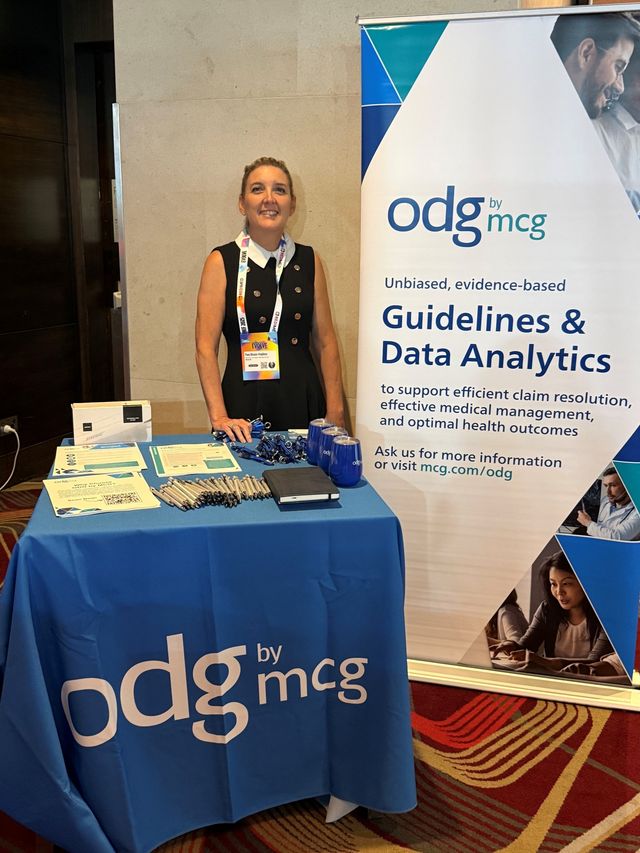
IAIABC: How does your organization serve the workers’ compensation industry?
PBP: ODG by MCG serves the workers’ compensation industry by providing evidence-based medical treatment guidelines, return-to-work tools, drug formulary support, and decision-support solutions that help stakeholders navigate complex claims with greater confidence. Our resources are used by claims professionals, case managers, utilization review teams, providers, employers, insurers, third-party administrators, and regulators to support timely, appropriate, and consistent care decisions.
By combining clinical rigor with outcomes-based insights, ODG helps reduce unnecessary delays, improve communication across stakeholders, and support more transparent and defensible decision-making. The result is a stronger foundation for better care, better outcomes, and a more efficient workers’ compensation system.
IAIABC: What do you see as some of the major challenges the industry is facing, and how can we as a community address them?
PBP: The workers’ compensation industry is facing several significant challenges, including increasing medical complexity, rising behavioral health needs, variation in treatment approaches, workforce shortages, and continued pressure to improve outcomes while managing costs. At the same time, the industry is adapting to rapid technological advances and growing expectations for transparency, consistency, and timely access to quality care.
One of the biggest opportunities for improvement is reducing unnecessary variation in care and supporting more consistent, evidence-based decision making across the system. Injured workers can experience very different treatment pathways and recovery outcomes depending on geography, provider patterns, and system processes.
Addressing these challenges will require continued collaboration across regulators, providers, payers, employers, and industry partners. At ODG, we believe evidence-based guidelines, transparent methodologies, and data-informed decision support can help improve communication, support timely treatment decisions, and promote better recovery outcomes for injured workers. By working together and grounding decisions in trusted clinical evidence, we can help create a more responsive, effective, and worker-centered system.
IAIABC: Are there any projects/programs/initiatives going on at your organization that you are particularly excited or enthusiastic about?
PBP: Since 2021, ODG by MCG has continued to build on its long-standing commitment to innovation and evidence-based guidance. One exciting area of growth has been the continued expansion of ODG for Auto Injury, which extends ODG’s trusted methodology into adjacent markets. ODG has also continued to strengthen its disability-related solutions and enhance the tools and resources available to support claims and care management professionals.
We are also proud of our continued investment in data-driven innovation, including the TAO Index (Treatment Analyzer on Outcomes Index), which helps evaluate medical interventions based on their relationship to return-to-work outcomes. Ongoing updates to treatment guidance, including support for emerging areas such as behavioral health, reflect our commitment to meeting the needs of an evolving industry with practical, evidence-based solutions.
Another area I am particularly excited about is the advancement of AI-enabled decision support capabilities designed to help reduce administrative burden and support more timely, consistent utilization review processes. At MCG, we believe innovation must remain rooted in trust, transparency, and evidence-based methodology. Our focus is on using AI thoughtfully to enhance human decision-making, improve access to trusted clinical guidance, and help reduce delays that can impact injured workers’ recovery and return-to-work outcomes.
IAIABC: What's an interesting fact about your organization that most people don't know?
PBP: One interesting fact about ODG is that its methodology is informed not only by medical literature and expert review, but also by one of the industry’s most extensive return-to-work datasets, built from millions of workers’ compensation and disability cases. That combination of evidence-based medicine and real-world outcomes data has long been a defining strength of ODG’s approach and continues to set it apart.
IAIABC: Why is your organization a member of the IAIABC? What would you tell others about the benefits of membership?
PBP: One of the greatest benefits of IAIABC membership is the opportunity to be part of a thoughtful, collaborative community that is deeply committed to improving workers’ compensation systems and outcomes. IAIABC creates meaningful space for dialogue, shared learning, and connection among regulators, administrators, industry partners, and other professionals from across the workers’ compensation landscape, and I am proud and honored to be part of the group.